Deep Scaling or Deep Gum Cleaning
Why do I need deep scaling?
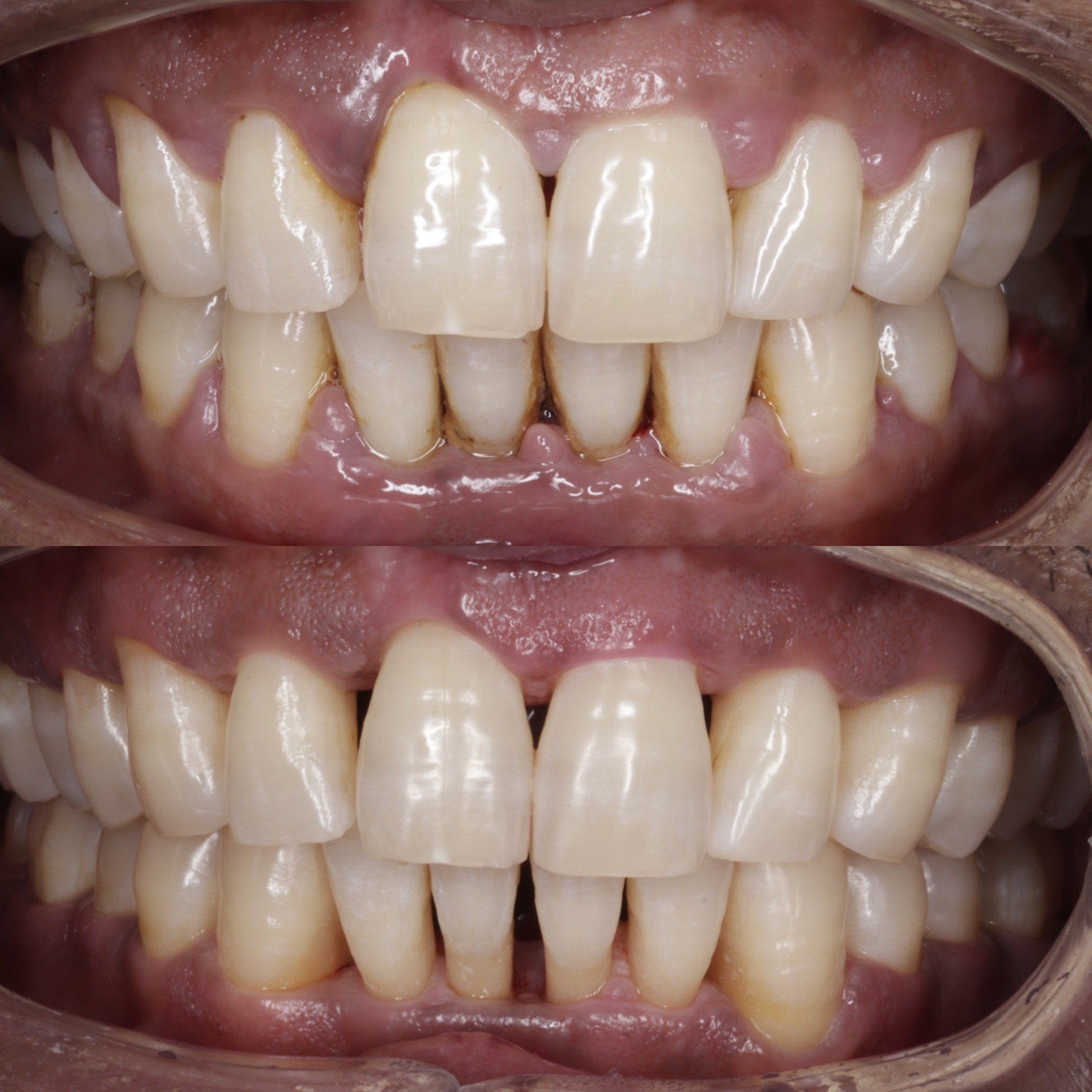
If your periodontal pockets are inflamed and greater than 5 mm, you may need to have a deep scaling procedure done to stabilise the gum disease. Normal cleaning will not be enough to resolve the problem.
What is involved in deep scaling?
Gums are numbed up, and various power-driven and manual instruments are used to remove calculus (tartar) from periodontal pockets.
The goal of deep scaling is to thoroughly remove calculus (tartar) from the root surfaces of your teeth and effectively reduce inflammation. This essential treatment helps restore gum health, prevent further periodontal issues, and promote a cleaner, healthier smile.
Possible side effects of deep scaling. Temporary tenderness of the gums and cold sensitivity of the teeth. Tenderness of the gums should subside within 24-48 hours after deep scaling. To improve the results of deep scaling, it is advisable to take all medications (antibiotics and painkillers) as prescribed by the dentist.
Not all patients develop teeth sensitivity as a result of deep scaling, but if it does occur, professional and over-the-counter products are very successful in fixing this (Sensodyne toothpaste, tooth mousse or others as prescribed by your clinician).
In some cases, small amounts of gum recession will occur as a result of the reduction of inflammation. The amount of recession one may get is hard to unpredict and depends on the stage of gum disease the patient has.
How much does deep scaling cost? The price depends on how many quadrants you need to be treated. One quadrant is $525.00. However before we proceed to any periodontal treatment everyone is required to undergo a periodontal assessment.
Full periodontal assessment ($245.00) is an essential part of correct diagnosis and effective treatment. As a part of the assessment, we thoroughly check and document all indicators related to your gum health; periodontal pockets depth, recession, mobility, furcation involvement, and signs of inflammation such as bleeding or the presence of pus. Gum disease affects not only gums but tooth-supporting bone structures. Necessary x-rays (OPG -panoramic $120 and periapical $35/each) are taken to confirm your diagnosis.
We discuss patients’ concerns in detail and go over available treatment options. By the end of the assessment, we can give you an estimate covering the costs involved in each appointment.
Can I avoid deep scaling and go straight into Perioscopy?
In most cases, Perioscopy is ineffective without prior deep scaling because advanced gum inflammation needs to be addressed first. Deep scaling helps remove hardened plaque and tartar beneath the gum line, reducing inflammation and allowing Perioscopy to be more effective in visualizing and treating the periodontal pockets.
However, there are some instances where a dentist may determine that going straight into Perioscopy is appropriate. This decision is made based on individual patient assessments, including the severity of gum disease, tissue condition, and overall oral health. Your dental professional will evaluate your specific situation to recommend the most effective treatment plan.
Why Deep scaling is generally more expensive? Deep scaling costs more than normal scaling because it involves a more thorough and intensive cleaning below the gum line, which takes additional time and effort. While normal scaling focuses on removing plaque and tartar buildup only on the surfaces of teeth above the gums, deep scaling targets the hidden bacteria and hardened tartar that accumulate on the tooth roots beneath the gums, which is essential for effectively treating gum disease. The procedure requires specialized dental instruments, greater expertise from the dental professional, and sometimes supplementary treatments such as antibiotics to ensure proper healing. Due to its complexity and the additional care involved, deep scaling is generally more expensive than a regular dental cleaning.